The sensory internet.
What happens when the boundary between thought and machine dissolves?
We are building the infrastructure for a world where human perception extends beyond the skull — where digital objects live in your room, your hands shape them, and your mind moves them. This is not a product roadmap. It is the future we are engineering toward.
Three Horizons
The Interface
Read intent from gaze, gesture, and neural signals simultaneously. Fuse them into one stream of control. Today: a working prototype that moves digital objects with a look and a thought.
The Platform
Open the system to developers. Worlds built on Multi Modal, a spatial OS where information lives in the room with you, driven by intent not keystrokes. Shared experiences across distance.
The Sensory Internet
A network where perception itself is the medium. Environments built by intent, shared spatially across continents, dreams as a computing surface, and physical AI extending human agency into machines.
Three channels read simultaneously, fused into one stream of intent. This is the core of the interface.
Your eyes lead — attention becomes a cursor in 3D space.
Principles
Body, mind, environment.
We merge all three. The interface is not a screen you look at — it is a space you inhabit, read by your body and your mind simultaneously.
Intent over instruction.
You don't operate the system. You intend, and it responds. The gap between thought and action collapses to single-digit milliseconds.
Honest about where things stand.
Every capability is labeled with its real status. What runs in a live demo today, what is in development, what is still research. No vapor.
Built for humans, not consumers.
This is an instrument, not an appliance. It is designed for people who want to create, play, and explore — not to be fed content.
Trajectory
First working prototype
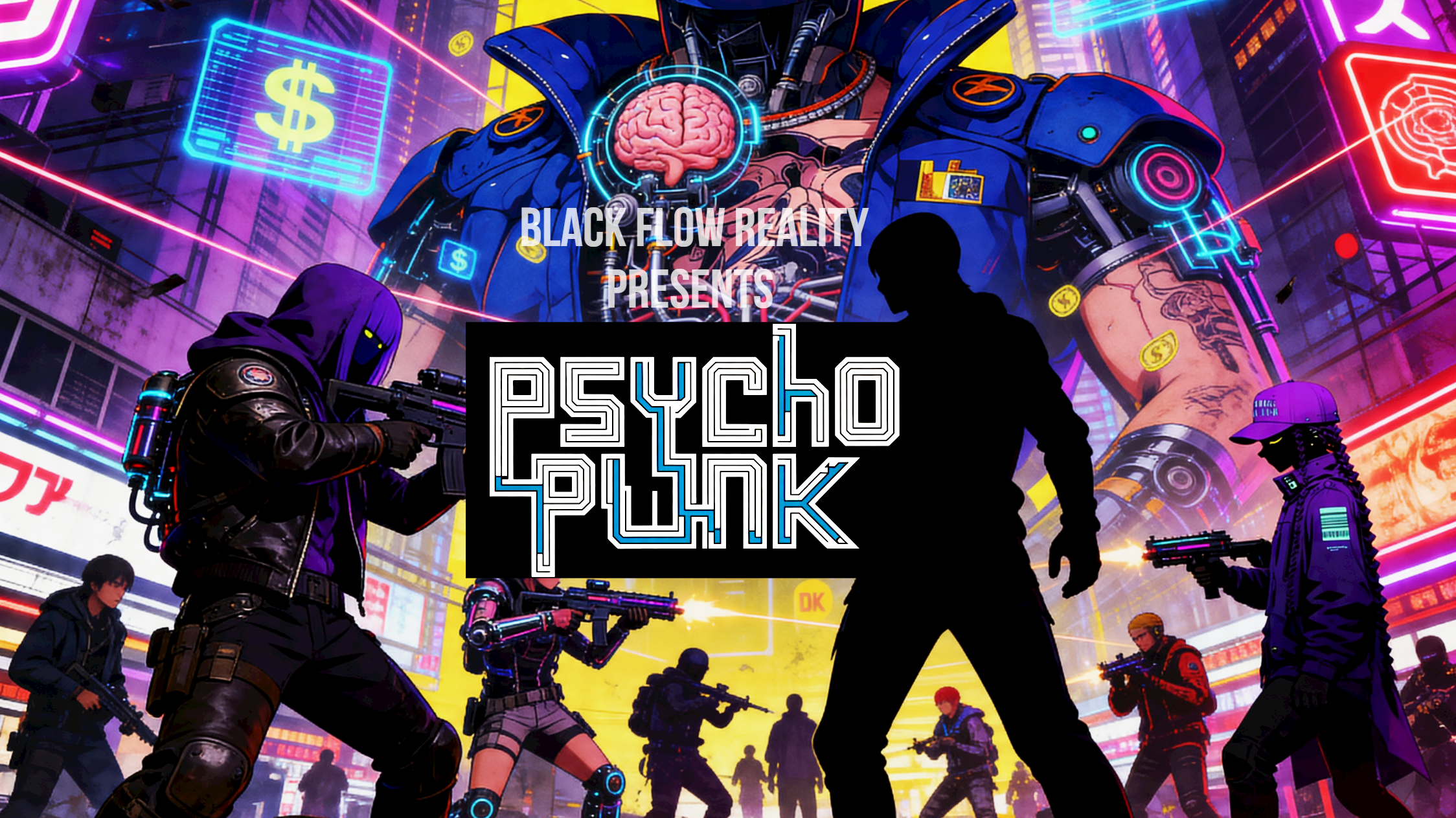
Digital telekinesis, Flow OS spatial shell, Psychopunk vertical slice — live in demos.
Developer kit
Multi Modal Dawn ships to early developers. First playable worlds. Richer neural and gestural control.
Shared spatial worlds
Multiplayer experiences built on the platform. Environments constructed by intent, shared across distance.
The full instrument
Dreams as a computing surface. Physical AI. The sensory internet — perception itself as the network.
Dreams as a surface.
The most speculative thread in our research: using neural interfaces to make the dream state a computable environment. Not today, not tomorrow. But the direction the technology points.
Build the future with us.
We are a small team engineering a new medium. If that is the kind of problem you are built for, we want to hear from you.